What is RankCockpit?
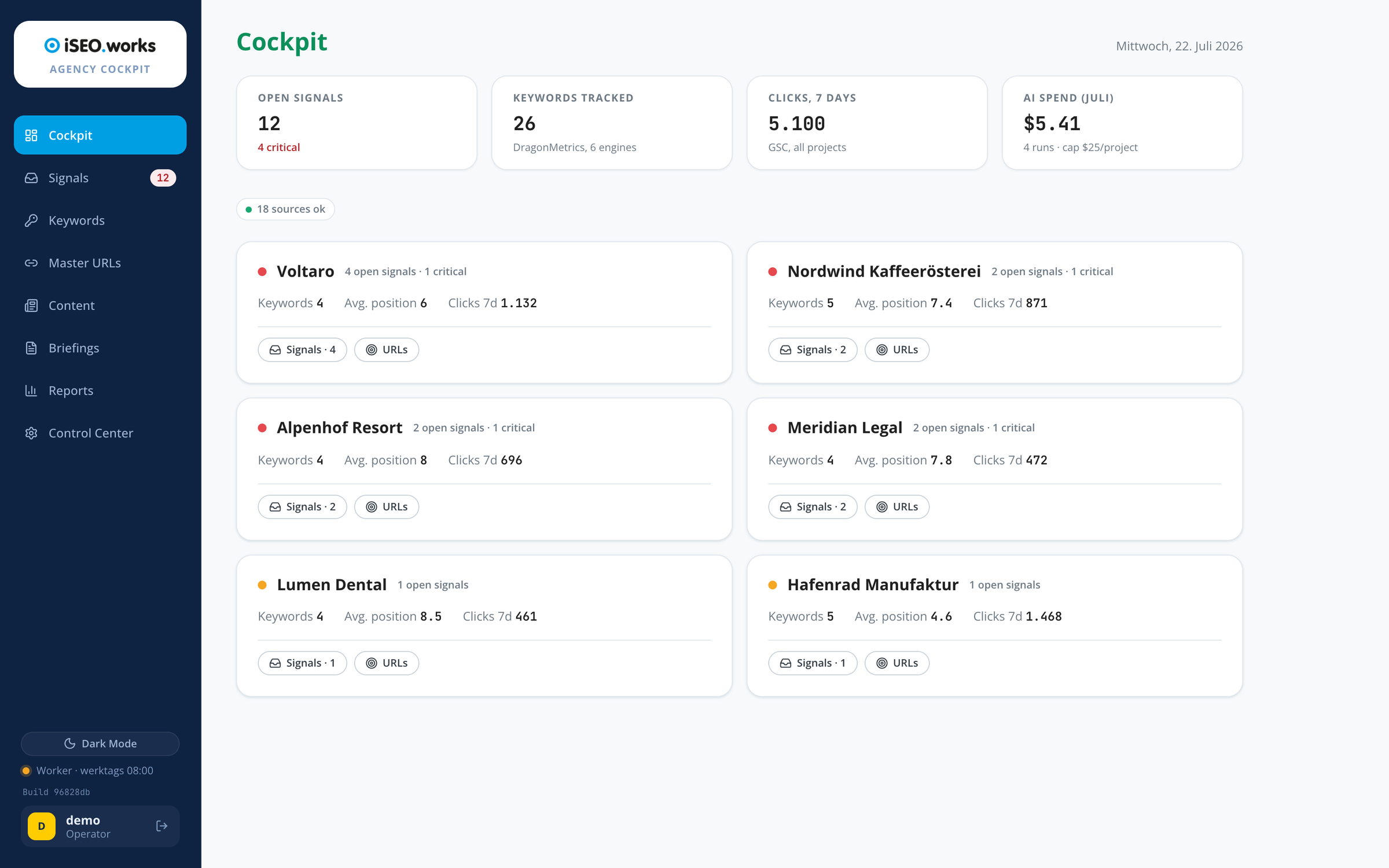
RankCockpit is an AI-assisted SEO and GEO (Generative Engine Optimization) workspace for freelancers, agencies, and in-house SEO teams. It brings performance monitoring, keyword research, content production, SEO briefs, and client reporting into one environment.
The idea is straightforward: connect your existing data sources, identify what needs attention, investigate the cause, and turn the findings into work. You receive a private copy of the complete system and run it in your own accounts, with Claude Code handling guided installation and helping you customize it.
Best Features
Signals and Analysis Agent – Turn Changes into Actions
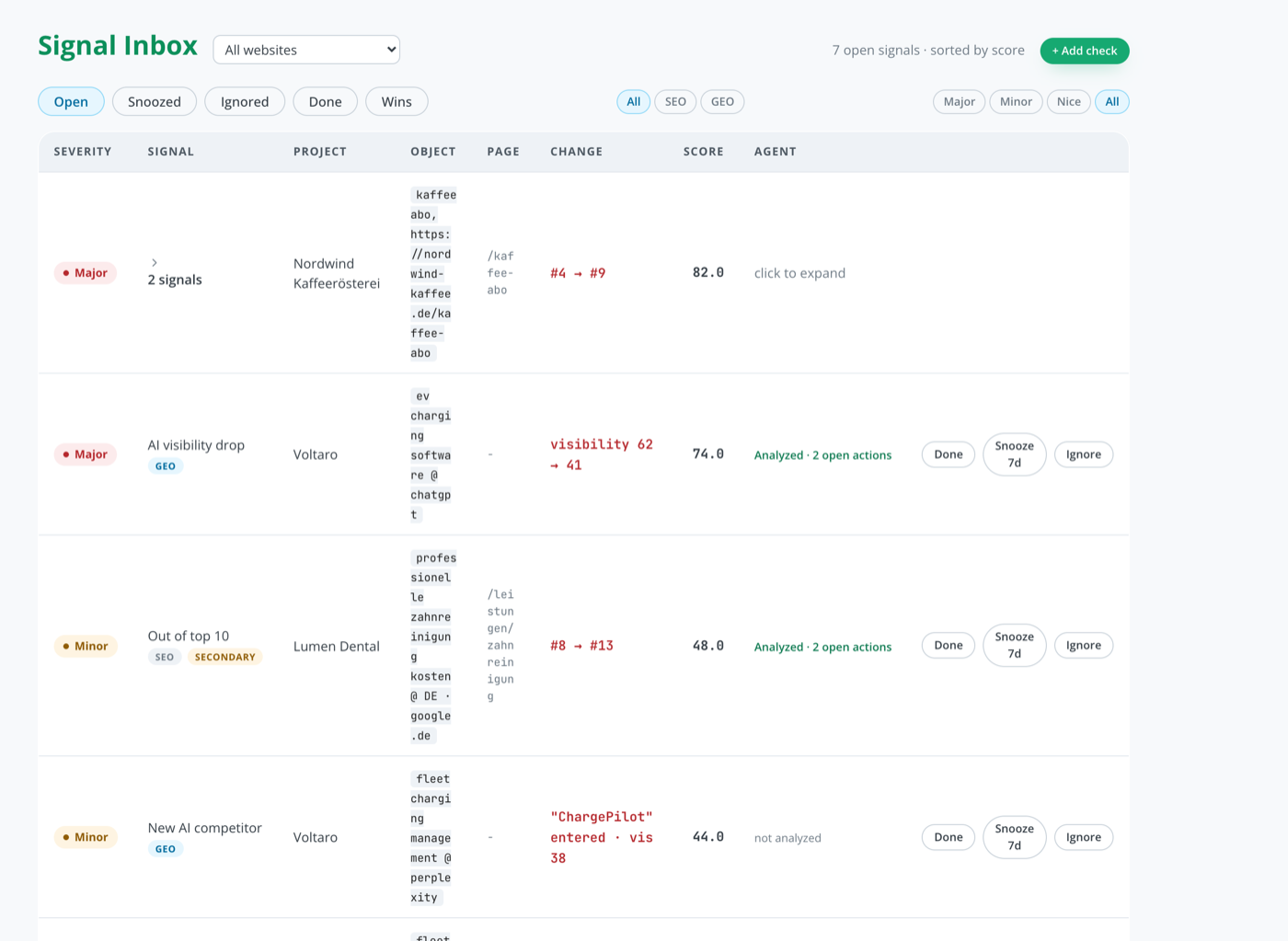
A prioritized inbox brings together ranking drops, click losses, keyword cannibalization, and AI visibility changes from your connected sources. Signals are weighted by business relevance, helping you focus on the pages that matter. When an issue needs investigation, the AI agent researches potential causes and provides evidence, a confidence assessment, and recommended actions with estimated effort and impact.
Keyword Research – Find Topics Worth Pursuing
RankCockpit collects keyword candidates from real Google data and uses an AI evaluation step to filter them for relevance. The results are organized into commercial and blog topic clusters, with priorities, difficulty indicators, and suggested titles and structures. This gives you a practical starting point for a content brief.
Content Pipeline – Manage Ideas, Drafts, and Publishing
A Kanban board tracks blog articles and LinkedIn posts from idea to draft, review, and publication. An integrated editor keeps writing and review in the same workspace. Scheduled publishing can maintain a regular cadence for configured channels, while an approval step keeps unapproved content from going live.
SEO Briefs – Create Data-Based Briefings in Google Docs
Select a project, target URL, and focus keyword to generate a page brief in Google Drive. The brief uses the project’s data and your preferred writing instructions, helping you move from a detected issue or keyword opportunity to a document an editor can work with.
Focus URLs – Keep Pages and Keywords Aligned
The page register connects target URLs with focus keywords and performance data, including rankings, search volume, impressions, and clicks where available. Cannibalization checks help you spot overlapping targets before you create another page competing for the same search intent.
Client Reporting – Review Reports Before Sharing
Generate monthly client reports that combine a plain-language summary, performance figures, completed work, and next steps. AI visibility can be included alongside traditional SEO metrics. Reports go through your review and approval before the client sees them.
Control Center – Choose Your Models and Edit Your Prompts
Prompts and language models can be configured globally or for individual clients, with model usage billed through OpenRouter. You can adapt the system to your methods, tone, and research priorities. Claude Code can also help modify thresholds, add signal rules, or build additional connectors.
Client Workspaces – Give Each Customer Their Own Access
Separate client logins, content areas, and feature controls let agencies decide what each customer can see and do. The system supports white labeling and client-specific prompts and models, so collaboration can happen within each customer’s own workspace.
Pricing
RankCockpit uses one-time license pricing. All tiers include the same eight modules and source code; the differences are team size and onboarding support.
- Freelancer: €1,790 for up to three people, including two hours of live onboarding, setup documentation, an operator handbook, and 12 months of maintenance and compatibility updates.
- Agency: From €3,900 for teams of four to ten, with a fixed price based on team size, four hours of onboarding, and 12 months of updates.
- Custom: Teams of 11 or more receive a quote after a scoping conversation. This includes the agency package plus one week of onboarding support.
Prices exclude VAT. The license permits work for your own clients, but does not allow resale or redistribution. Hosting, AI usage, Claude Code, and any paid data services are separate from the license. As a reference, the website reports approximately $15 per month for AI analyses across six projects; actual costs depend on usage and connected services.
15-Minute Demo Available
You can book a 15-minute demo to see the workflow and discuss which license fits your team.
Why Choose RankCockpit for Your SEO Workflow?
- From diagnosis to delivery: Connect signals, research, briefs, content, and reporting in one workflow.
- SEO and GEO together: Review conventional search performance and AI visibility using the data sources you connect.
- Control over your setup: Run your private copy in your own accounts and adapt it with Claude Code.
- Flexible integrations: Connect services such as Google Search Console, GA4, DataForSEO, Rankscale, and Google Docs; additional sources require an appropriate connector.
- Less alert noise: Configurable thresholds and protection against repeated fluctuation alerts help keep the inbox useful.
- Agency collaboration: Use separate client access, feature controls, and white labeling.